

Responsible tourism in Peru
ESNNA Code of Conduct
Travelution Peru maintains a zero-tolerance policy against the sexual exploitation of children and adolescents in travel and tourism. We protect, prevent, report, and promote respectful journeys across Cusco and Peru.
Legal framework
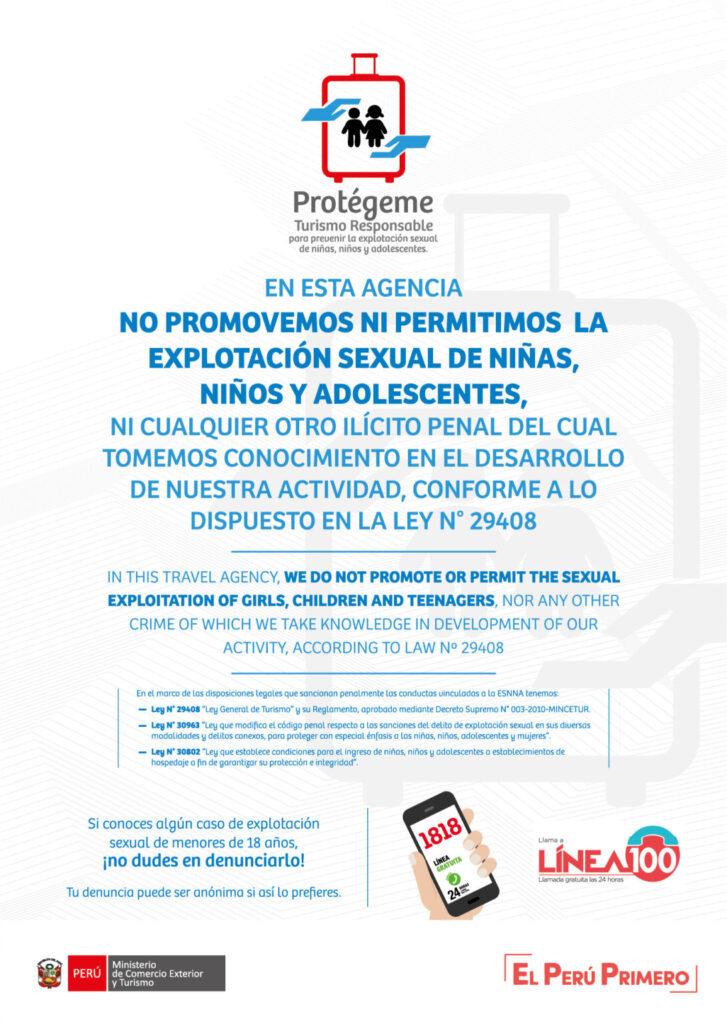
Peruvian tourism service providers must subscribe to the ESNNA Code of Conduct and display preventive information in their official channels.
What ESNNA means
ESNNA refers to sexual exploitation of children and adolescents. In tourism, prevention requires active awareness, ethical suppliers, and immediate reporting.
Shared responsibility
Travelers, agencies, guides, hotels, transport providers, and local communities all play a role in keeping children and adolescents safe.
Our commitment
A clear policy for ethical travel
Our operation is designed to prevent, reject, and report any conduct linked to the sexual exploitation of minors. We do not promote, facilitate, tolerate, or ignore suspicious behavior in any service connected to our trips.
- We inform our team, suppliers, and travelers about the ESNNA Code of Conduct.
- We select partners who respect child protection standards and responsible tourism practices.
- We report suspicious cases to the competent authorities when necessary.
- We protect the dignity, privacy, and integrity of every child and adolescent.
Prevention actions
How we act before, during, and after every trip
We follow a prevention-first approach, aligned with the tourism sector’s duty to discourage, identify, and report risks that may affect children and adolescents.
Team awareness
Our staff and guides are reminded of reporting duties, respectful conduct, and warning signs in travel environments.
Responsible routes
We design travel experiences that value culture, communities, and safety, without exposing children or adolescents to harm.
Supplier standards
We expect hotels, transport operators, restaurants, and local partners to follow ethical and lawful tourism practices.
Prompt reporting
Any suspected ESNNA situation must be reported to competent authorities through official channels.
Traveler responsibility
Protective travel starts with each decision
Every guest is expected to respect Peruvian law, local communities, and the rights of children and adolescents. If something seems wrong, report it immediately.
Never request or accept illegal services
Any sexual conduct involving minors is a crime. Travelution Peru rejects any client, supplier, or third party involved in such conduct.
Respect privacy and dignity
Do not photograph, approach, or involve children and adolescents in ways that are intrusive, unsafe, or disrespectful.
Report suspicious situations
If you suspect exploitation, trafficking, grooming, coercion, or abuse, contact authorities, your guide, or our operations team.
Choose responsible providers
Support tourism businesses that publicly commit to prevention, fair treatment, and lawful service delivery.
Report channels
If you know or suspect an ESNNA case, report it
Do not confront a suspected offender on your own. Preserve your safety, collect basic information only when it is safe, and contact official authorities or our team immediately.
Contact Travelution Peru
Share any concern with our operations team so we can guide you toward the appropriate authority and take internal action when needed.
Important note
Reports should be made in good faith. When a child or adolescent may be at risk, quick and responsible action is more important than having every detail.
Travel with care
Peru deserves tourism that protects its people.
By choosing responsible travel, every visitor helps preserve the safety, dignity, and future of children and adolescents in the communities we visit.